
Weigh Price Labelling Systems Weigh, Price and LabelAutomatically
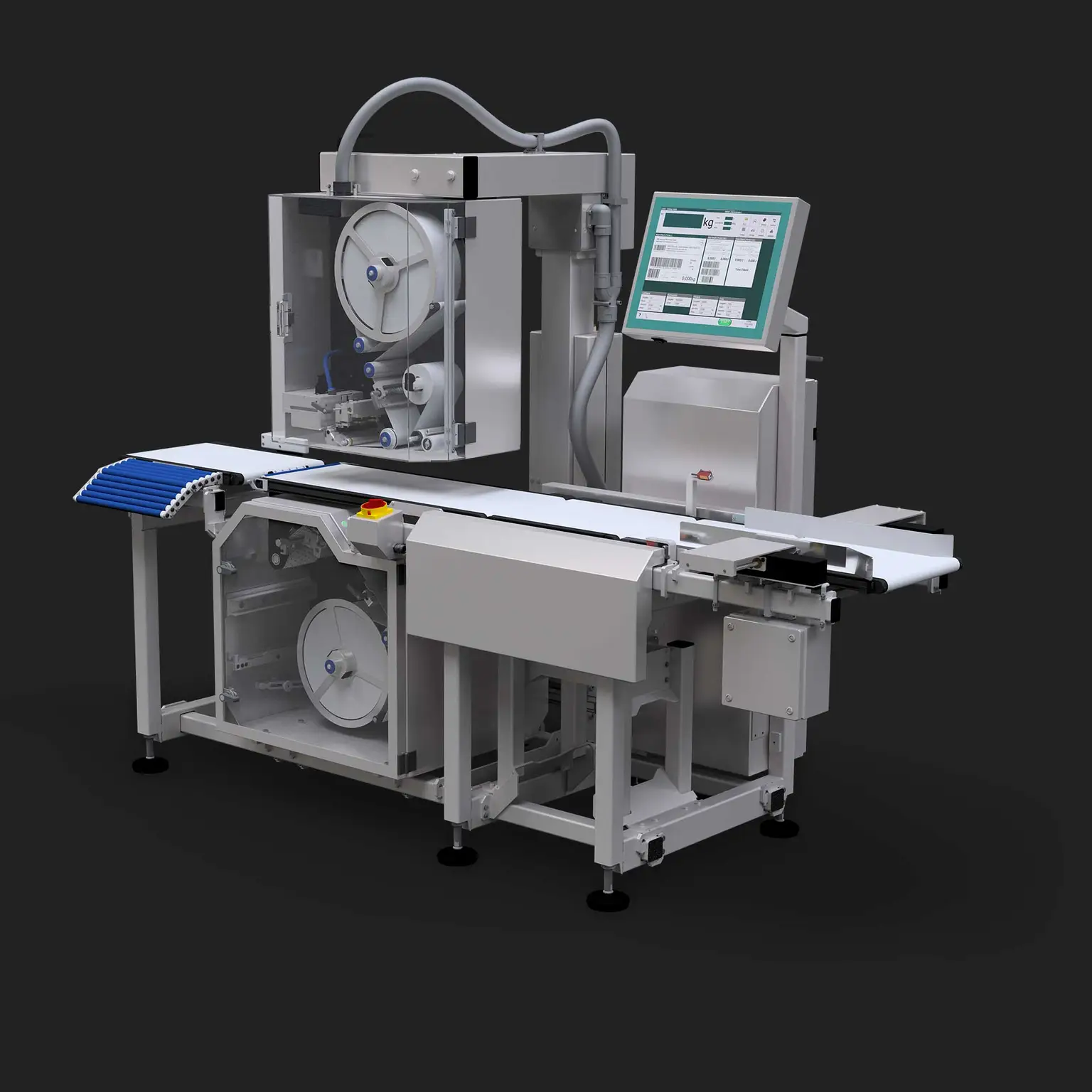
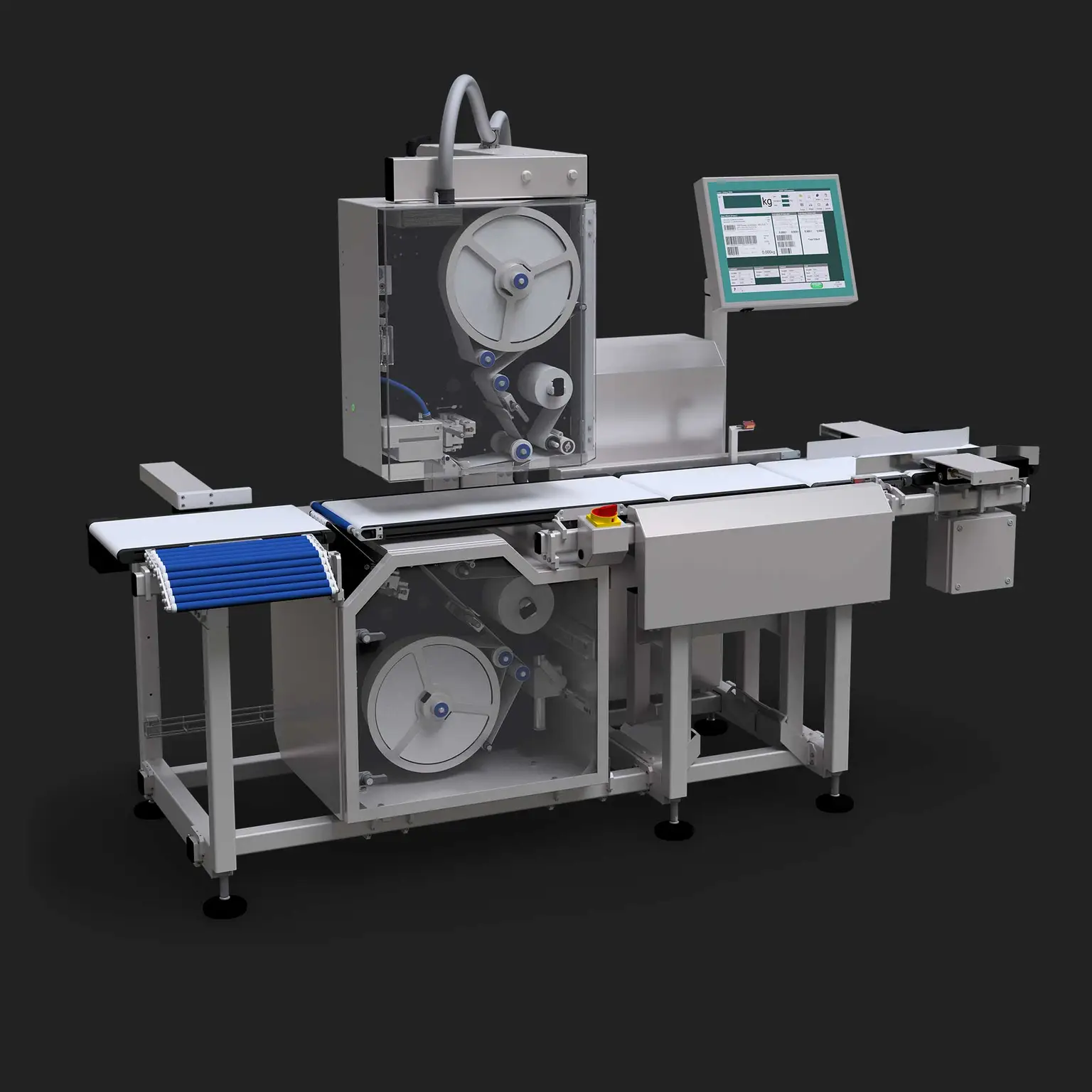
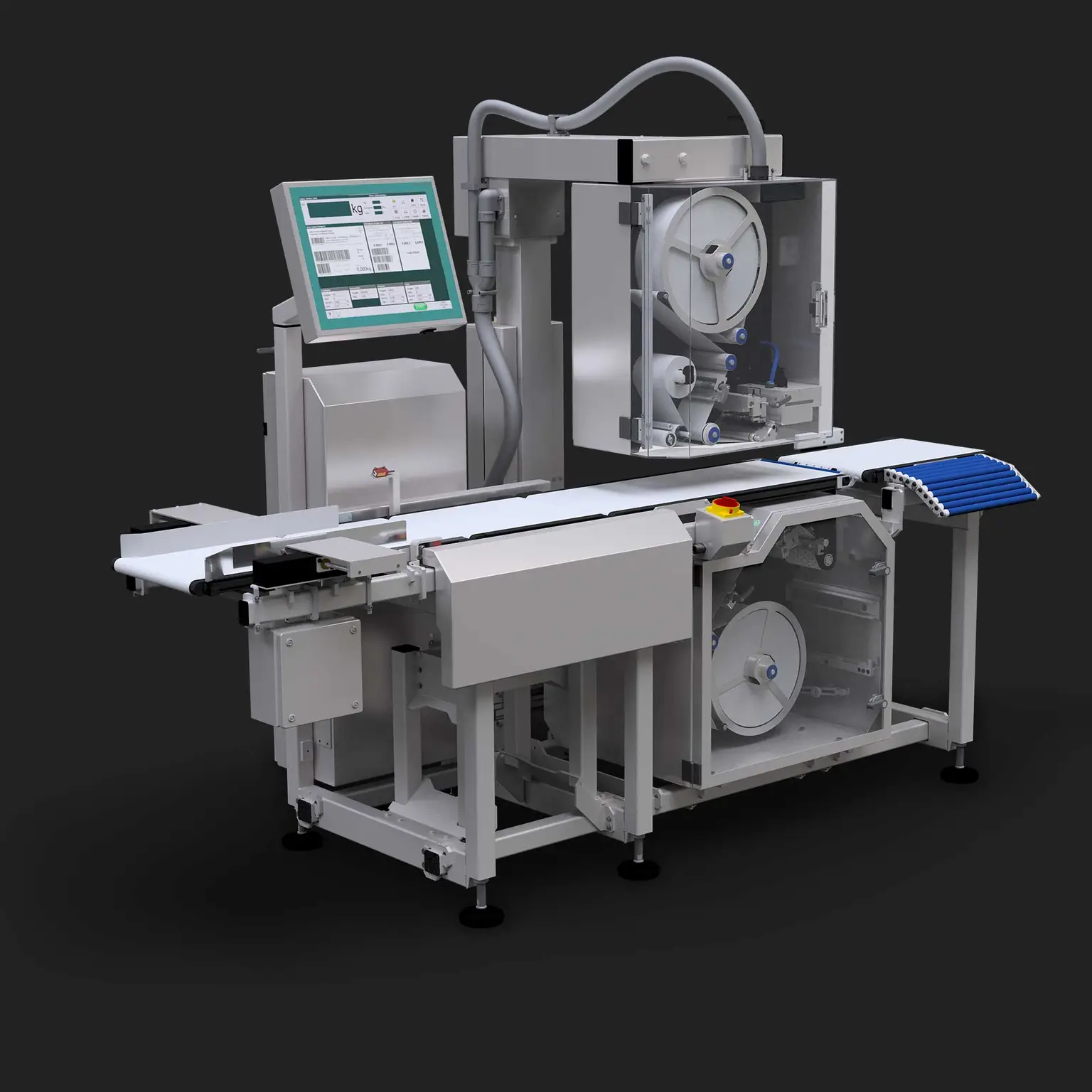
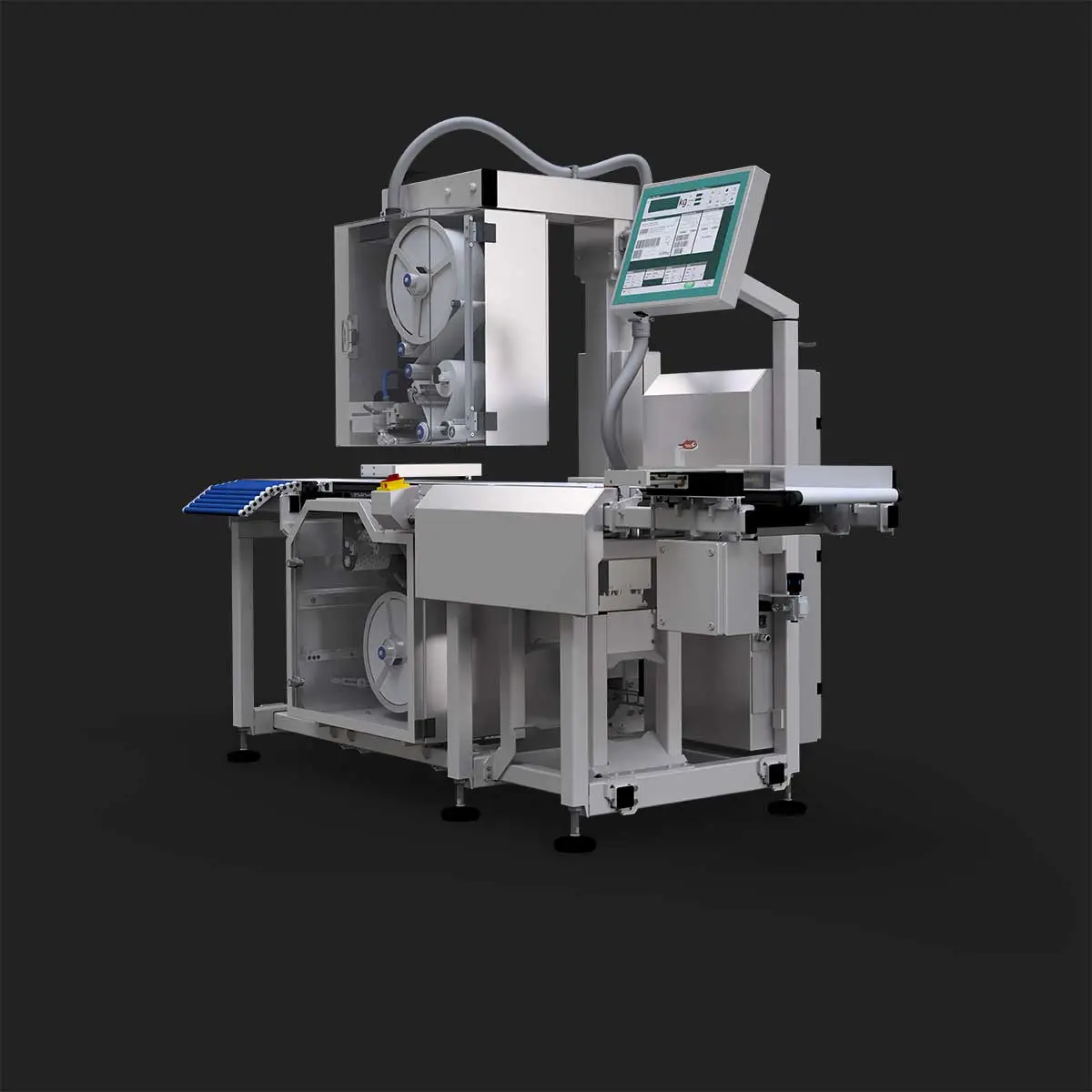
A weigh price labelling system weighs each packaged product dynamically while it moves alongthe line, calculates the selling price from the measured weight, then prints and applies a label — fully automatically, at up to 180 packs per minute. Also known as weigh price labellers, pricelabelling scales or automatic pricing machines, these systems are the standard solution for catch-weight products such as meat, poultry, fish, cheese and fresh produce.
- Up to 180 packs per minute
- at a print speed of up to 300 mm/s
- Verified weighing with a 0.5 g scale interval
- accurate prices, minimal give-away
- Fully automatic product changeover
- and optional integrated print-image inspection forlabel quality you can prove
Together with our partner Leich+Mehl — a specialist in weighing and labelling technology formore than 35 years — Wipotec delivers weigh price labelling solutions engineered forexceptionally low total cost of ownership. Some of the first PAW-series systems are still inindustrial use today and have printed well over 200 million labels.
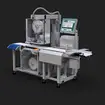
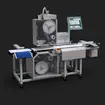
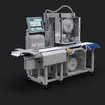
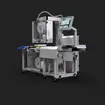 1 / 3
1 / 3


What Is Weigh Price Labelling?
Weigh price labelling is the process of weighing each individual product, calculating its sellingprice from the measured weight and the price per kilogram, and applying a label that carries theweight, unit price, total price and all legally required product information. It is essential whereverpack weights vary naturally — known as catch weight — because no two cuts of meat, blocks ofcheese or portions of fish weigh exactly the same.
The process runs in four steps, all in motion and without operator intervention:
- Infeed and separation: packs arrive from the packaging line and are spaced forindividual weighing.
- Dynamic weighing : the pack is weighed on a weighing conveyor at full line speed.
- Price calculation and printing: the controller computes the price and prints the label,including barcodes, dates and mandatory declarations.
- Label application: an applicator places the label on the top, bottom or side of the pack,exactly where it belongs.
Weigh Price Labeller, Checkweigher or Print & Apply — What's the Difference?
A checkweigher verifies that a pack's weight lies within tolerance and rejects deviations. A print& apply system applies pre-defined labels without weighing. A weigh price labeller does more: ituses the live weight of every single pack to generate an individual price label. Modern systemscombine these functions — the PAW 3, for example, can also be operated as a checkweigher forpre-packaged goods, so one machine covers both pricing and weight control.
| Checkweigher | Print & Apply | Weigh price labeller | |
|---|---|---|---|
| Weighs every pack | Yes | No | yes |
| Prints variable data perpack | No | Limited | Yes (weight, price, codes, dates) |
| Calculates a price fromweight | No | No | Yes |
| Typical use | Weight control, ℮-markcompliance | Logistics and caselabelling | Catch-weight retailpacks |
Fixed Price or Catch Weight — How the Price Is Calculated
For catch-weight products, the system multiplies the verified net weight by the stored price perkilogram and prints the result on the label. For fixed-weight, fixed-price articles, the samemachine simply prints the stored price — so mixed production programmes run on one line.Article data (PLUs), prices and label layouts are managed centrally on the machine or fed directlyfrom your ERP system.
Curious to find out more?
How Does an Automatic Weigh Price Labelling Machine Work?
An automatic weigh price labelling machine consists of an infeed conveyor, a precision weighingconveyor, one or more label printers with applicators, and a central control unit with touchscreen. On the PAW 3, a 17-inch touchscreen with context-sensitive menus controls every connectedprinter and provides centralized article and label management.
Key components at a glance:
- Weighing unit:
verified (legal-for-trade) dynamic weighing with a scale interval (d) downto 0.5 g and accuracy classes Y(a) and XIII(1). Weighing ranges of 1.875 kg, 3.75 kg or 7.5 kgwith a minimum load of 20 g or 40 g (depending on range) cover everything from smallportions to family packs. - Printers:
thermal direct printing as standard, thermal transfer optional; 8 dots/mmresolution (optionally 12 dots/mm) and 104 mm print width produce a consistently sharpprint image even at 300 mm/s. - Applicators:
air-jet application from above and vacuum-belt application from below. Anynumber of additional printers can be connected for top, bottom and lateral labelling in anycombination. - Label handling:
label formats from 35 × 35 mm up to 110 × 110 mm for top labelling and upto 110 × 170 mm for bottom labelling, with roll diameters up to 350 mm for long,uninterrupted production runs.

Verified Accuracy at Full Line Speed
Every gram of weighing error becomes a pricing error: declare too little and you violatemetrology law, declare too much and you give product away for free. With a scale interval (d) of0.5 g, weigh price labelling systems keep the tolerance band tight — which directly reduces give-away across thousands of packs per shift. Total and daily production figures per PLU areretrievable at any time via integrated counters, giving you a continuous, auditable record ofweights and yields.
Labelling From Above, Below or the Side
Where the label goes is a product decision, not a machine limitation. Top labelling with theoptimized air-jet applicator is contact-free and fast; bottom labelling via vacuum belt keeps thepresentation surface clean for premium packs; combined top-and-bottom configurations — forexample one price label on top and one full-declaration label underneath — run in a single pass.The PAW 3 handles pack formats up to 500 × 300 × 200 mm.
Which Speed and Capacity Do You Need?
How fast a weigh price labeller really runs depends on pack length and spacing, label size, printtime and the regularity of the product infeed — a quoted maximum is only reached with a steady product flow.
As a rule of thumb:
| Performanceclass | Throughput | Typical application |
|---|---|---|
| Compact / entry | up to ~60 packs/min | Manual or semi-automatic feeding, small batches, frequentchangeovers |
| Mid-range | 60–120 packs/min | Standard tray lines for meat, cheese and convenience products |
| High Speed | 120–180 packs/min | High-volume lines in meat, poultry and dairy processing — thePAW 3 class |
The PAW 3 reaches up to 180 labelled packs per minute and is available in multiple weighingranges, machine lengths, belt dimensions and working heights (850 mm +70/−50 mm asstandard), so the system adapts to your production conditions rather than the other way round.

Fully Automatic Product Changeover — No Manual Intervention
Changeover time is hidden capacity. On conventional machines, every article change meansmanual adjustment of labeller height, label position and product guides. The PAW 3 automatesthe complete changeover: when a new article is selected, the transport speed, labeller height andhorizontal labeller position adjust automatically, the label position is repositioned for the newproduct, and — a genuine innovation in this class — the air-jet applicator adapts itselfautomatically to the new label size. Optionally, even the product guides reposition themselves,asymmetrically if required. No manual intervention is needed.
For production planners this means: more saleable minutes per shift, reproducible settingsinstead of operator-dependent adjustment, and the flexibility to run small batches economically.

Integrated Quality Control: Inspecting Every Printed Label
Mislabelling — above all undeclared allergens — is among the most common causes of foodrecalls: wrong declarations, unreadable barcodes or missing dates can take entire batches out ofthe market. That is why print-image inspection belongs inside the labelling process, not behindit.
Camera-Based Print Inspection Without Layout Teach-In
The PAW 3 is optionally equipped with a camera system that is mechanically integrated into theprinter and connected directly to the machine's central control. It monitors the complete printimage of every label and automatically rejects any pack on which individual print objects are notlegible. Unlike conventional vision solutions, no layout teach-in is required — the system knows
what it prints, so it knows what it must verify. New articles and label layouts are inspected fromthe first pack onwards.
Extending Inspection Along the Line
Weigh price labelling is one quality gate of several. As one of the world's leading suppliers ofdynamic weighing and product inspection technology, Wipotec integrates further inspectionsteps along the same line where required — from checkweighing to metal detection and X-rayinspection of foreign objects. One contact, one line concept, consistent data.
Legislation and Verification: EU 1169/2011, MID, the e-Mark and NationalVerification
Weigh price labelling sits at the intersection of food information law and metrology law. Therelevant framework in the EU:
- Regulation (EU) No 1169/2011 defines what must appear on a food label: product name,ingredient list with emphasized allergens, net quantity, date of minimum durability or use-by date, storage conditions, operator name and address, origin where required and thenutrition declaration. For goods sold by weight, the weight, unit price and selling price areadded — exactly the data a weigh price labeller prints automatically and consistently fromone central article database.
- The Measuring Instruments Directive (MID, 2014/32/EU) governs instruments thatdetermine weight and price for trade. Weigh price labelling systems are designed andverified as legal-for-trade automatic weighing instruments (accuracy classes Y(a), XIII(1)on the PAW 3).
- The ℮-mark and the average weight system allow individual packs to deviate slightly aslong as the batch average meets the declared quantity and legal minus tolerances arerespected. This requires verified weighing and statistical recording — capabilities built intomodern weigh price labelling systems.
- National verification: in the Netherlands, weighing instruments used for trade must beverified, and re-verified after repairs that break the seal, by recognized bodies such as NMi.
Line Integration, Data and Software
A weigh price labelling system is only as good as its connection to the rest of your production.Integration happens on two levels:
- Mechanical integration: variable machine lengths, belt dimensions, working heights andrunning directions allow the system to slot into existing lines; any number of additional printers
and standard peripherals can be connected. - Data integration: the control unit is network-capable via Ethernet (TCP/IP) and offers an openXML interface for seamless ERP integration — article data and prices flow in, pack-levelproduction data flows back. An OPC-UA interface is available for Industry 4.0 architectures,alongside RS 232C, RS 422/485 and USB. A remote control and maintenance module enables fastsupport without waiting for a technician on site.
- Label management: label layouts are designed either directly on the machine in the integratedgraphic mode or on a PC with the LANScale Designer application. The system is Unicode-capable for multilingual labels and prints all common barcodes — including the 2D codes (QR,GS1 DataMatrix) that retail is moving towards under the GS1 "Sunrise 2027" migration.
Traceability Down to the Individual Pack
Because every pack is weighed, priced and labelled individually, every pack generates a datarecord: article, weight, time and counter status per PLU. Encoded into the label — increasingly asa 2D code carrying batch and date information — this turns each pack into a traceable unit. In theevent of a recall, you isolate exactly the affected batch instead of a full day's production.
Applications by Industry
- Meat processing: Catch-weight cuts, MAP trays and vacuum packs are weighed and priced atline speed; a robust, easy-to-clean construction with directly accessible components withstandsthe demands of meat environments.
- Poultry: Variable-weight fillets and whole birds demand wide weighing ranges (from 20 gupwards) and flexible label positions — top, bottom or both in one pass.
- Fish and seafood: Fast throughput for short shelf-life products, with verified weights andcomplete mandatory declarations on every pack.
- Cheese and dairy: Blocks, wedges and slices with natural weight variation are priced exactly;bottom labelling keeps the presentation surface free.
- Convenience food: Ready meals with mixed fixed-price and catch-weight components run onthe same line thanks to PLU-based article management.
- Bakery and fresh produce: Frequent article changes are economical because changeover is fullyautomatic — no manual adjustment between batches.
Hygienic Design and Maintenance
All functional components are directly accessible — nothing is built in behind other parts —which makes cleaning and maintenance exceptionally straightforward and keeps planneddowntime short. The modular design means functional parts are replaced quickly instead ofrepaired at length. Low mechanical wear is a design principle: it is the basis for the system'sreliability record and its low maintenance cost over decades of operation. Remote maintenanceshortens response times when support is needed.
Curious to find out more?
FAQ about Weigh Price Labelling Systems
What is a weigh price labelling system?
A machine that dynamically weighs packagedproducts, calculates the selling price from the measured weight and automatically prints andapplies a label — used primarily for catch-weight foods such as meat, cheese, fish and freshproduce.
How many packs per minute can it process?
Entry-level systems handle up to about 60 packsper minute, mid-range systems 60–120, and high-speed systems such as the PAW 3 up to 180. Thereal-world rate depends on pack size, label format and how evenly products arrive.
How accurate is the weighing?
The PAW 3 weighs with a scale interval (d) down to 0.5 g in legal-for-trade accuracy classes Y(a) and XIII(1), across weighing ranges of 1.875, 3.75 or 7.5 kg with aminimum load of 20 g or 40 g depending on the range.
Can labels be applied to the bottom of the pack?
Yes. Air-jet applicators label from above and avacuum-belt applicator labels from below; any number of additional printers can be combined
for top, bottom and lateral labelling in one pass.
What is the difference between a weigh price labeller and a checkweigher?
A checkweigheronly verifies weight tolerances; a weigh price labeller uses each pack's weight to print anindividual price label. The PAW 3 can additionally be operated as a checkweigher for pre-packaged goods.
Can the system be integrated with our ERP software?
Yes — via Ethernet (TCP/IP) with anopen XML interface, optionally OPC-UA, plus RS 232C, RS 422/485 and USB. Article data flowsin; pack-level production data flows back.
Which barcodes can be printed?
All common 1D and 2D codes, including EAN, GS1-128 and GS1DataMatrix/QR — ready for the retail migration to 2D codes. Labels are Unicode-capable formultilingual declarations.
What label sizes are supported?
From 35 × 35 mm up to 110 mm width and 110 mm (top) or 170mm (bottom) length, from rolls up to 350 mm in diameter; printing is thermal direct or optionallythermal transfer at up to 300 mm/s.
What must legally appear on a food label in the EU?
Under Regulation (EU) 1169/2011: productname, ingredients with emphasized allergens, net quantity, durability date, storage conditions,operator name and address, origin where required and the nutrition declaration — plus weight,unit price and selling price for goods sold by weight.
What does the ℮-mark mean?
It indicates the pack was filled and checked under the EU averageweight system: individual packs may deviate slightly if the batch average meets the declaredquantity and legal minus tolerances — which requires verified weighing and statistical records.
When must the weighing instrument be verified?
Legal-for-trade weigh price labellers must beverified before use and re-verified after repairs that break the seal, by recognized bodies (in theNetherlands, e.g. NMi).
How does the system support traceability and recalls?
Every pack is individually weighed andlabelled, producing a pack-level data record and machine counters per article; encoded in thelabel, this lets you isolate exactly the affected batch in a recall.
What happens during a product changeover?
It runs largely without manual intervention:labeller height and position, label position, transport speed and even the air-jet applicator'sadaptation to the new label size adjust automatically; product guides can repositionautomatically as an option.
How is label print quality controlled?
An optional camera system integrated into the printerinspects the complete print image of every label and rejects packs with illegible print objects —with no layout teach-in required.
What does a weigh price labelling system cost?
The investment depends on speed class,number of printers, applicators and integration options. The more relevant figure is total cost ofownership — where long service life, low wear, low consumption and minimal downtime makethe difference. Request a configuration-specific quote.
What is the payback period?
That depends on your volumes, shift model and labour costs. Thethree drivers are always the same: replaced manual pricing labour, reduced give-away throughaccurate weighing, and avoided mislabelling costs. We will gladly calculate the payback for yourspecific line as part of a quotation.
How much energy and compressed air does it use?
The PAW 3 was specifically optimized forlow consumption: revised drive technology and an optimized air-jet applicator significantlyreduce electricity and compressed-air use; connected load is approx. 1 kVA at 400 V / 50 Hz.
Is the machine difficult to clean and maintain?
No — all functional components are directlyaccessible with nothing built in behind, and the modular design allows fast replacement of parts.A remote maintenance module supports quick diagnosis.
Can one machine handle both fixed-weight and catch-weight products?
Yes. PLU-based articlemanagement runs fixed-price and weight-priced articles on the same line, switchingautomatically per product.